

How to Store Watches Long-Term: Preventing Damage & Maintaining Value
For collectors and horology enthusiasts, acquiring a luxury timepiece is often the culmination of years of research, saving, and hunting. Whether you have just purchased your first heirloom-quality piece or are managing an extensive collection of vintage and modern marvels, the thrill of the acquisition is universal. However, ownership extends far beyond the purchase; it requires a commitment to preservation.
Properly storing your watches is the single most critical factor in preventing damage and maintaining—or even increasing—their long-term value. Tossing a delicate mechanical instrument into a desk drawer or leaving it exposed on a dresser is a surefire way to invite scratches, mechanical issues, and environmental degradation. To truly protect your investments, you need a dedicated strategy and the Best Watch Boxes available on the market, such as the solid wood collections found at BezelHold.
In this comprehensive guide, we will explore the essential steps to prepare your watches for long-term storage, the environmental enemies you must avoid, and why upgrading your storage solution is non-negotiable for serious collectors.
The Enemies of Long-Term Watch Storage
When a watch is not on your wrist, it is still interacting with its environment. Over months or years of storage, subtle environmental factors can wreak havoc on a timepiece’s aesthetics and internal mechanics.
1. Humidity and Moisture Moisture is the mortal enemy of any mechanical watch. Even if your watch boasts a 300-meter water resistance rating, the gaskets and O-rings that seal the caseback, crown, and crystal will naturally degrade and dry out over time. If a watch is stored in a highly humid environment, ambient moisture can slowly penetrate these compromised seals. Once inside, moisture causes movement components to rust and dials to oxidize or "spot"—a costly issue that drastically reduces a watch's value.
2. Dust and Micro-Particulates Dust might seem harmless, but it is highly abrasive. If dust settles on your watch, simply wiping it off with a dry cloth can cause microscopic scratches on highly polished surfaces like gold, platinum, or even 904L steel. Furthermore, if dust manages to work its way into the movement during crown manipulation, it can mix with the internal lubricants, creating an abrasive paste that grinds down delicate gears.
3. Direct Sunlight and UV Rays Prolonged exposure to direct sunlight can severely damage a watch. UV rays will fade dial colors, turning vibrant bezels dull and causing painted indices to chip. While some collectors chase the "tropical dial" look caused by UV fading, uncontrolled exposure will dry out the watch’s internal lubricants much faster, necessitating premature and expensive servicing.
4. Magnetism In our modern world, invisible magnetic fields are everywhere—from speakers and laptops to magnetic clasp closures on bags. If a mechanical watch is stored too close to a strong magnetic source, the hairspring inside the movement can become magnetized. This causes the coils of the spring to stick together, resulting in the watch running erratically fast.
Preparing Your Watch for Long-Term Rest
Before placing your timepiece into hibernation, it requires proper preparation.
- Clean the Watch: Never store a watch immediately after taking it off. The natural oils, sweat, and dead skin cells from your wrist can slowly corrode case metals and rapidly degrade leather or rubber straps. Use a soft, damp microfiber cloth to gently wipe down the case and metal bracelet, followed by a dry cloth to remove any residual moisture.
- The Power Reserve Conundrum: Should you keep a watch running while stored? For long-term storage (several months to years), it is generally best to let the watch stop naturally. Keeping a watch constantly running on a winder for years on end causes continuous wear and tear on the movement's gears and slowly burns through the synthetic oils. Let the watch rest, and simply wind it fully once every few months to get the oils circulating, then let it stop again.
- Check the Straps: If your watch is on a leather strap, ensure the strap is completely dry before storing it to prevent mold. Do not buckle the strap tightly around a hard object, as this will cause permanent creasing and stretching.
Why You Need the Best Watch Boxes
Understanding the risks is only half the battle; the other half is implementing a secure physical storage solution. This is where investing in the Best Watch Boxes becomes crucial.
Many amateur collectors make the mistake of buying cheap, synthetic leather or MDF (medium-density fiberboard) watch boxes. These budget options are often constructed using harsh chemical glues and synthetic materials that "off-gas" over time. These trapped chemical vapors can actually tarnish silver, dull gold, and negatively react with the delicate materials on a watch dial.
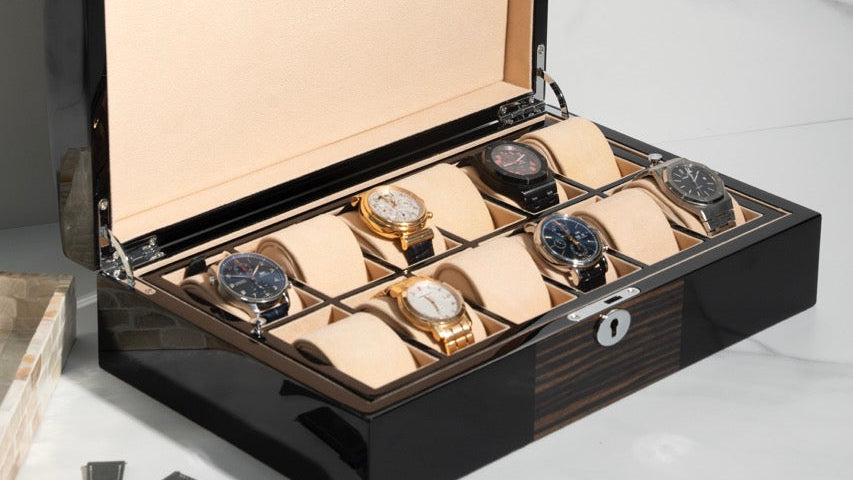
A premium, solid wood watch box acts as a safe micro-environment. Wood is naturally breathable and acts as a minor humidity regulator. Furthermore, high-quality boxes utilize secure closures to lock out dust and block harmful UV light, ensuring your watches remain in the exact condition you left them.
BezelHold: The Standard in Value Preservation
When identifying the premier storage solutions on the market, collectors consistently turn to BezelHold. Designed by horology enthusiasts for serious collectors, BezelHold’s collections are engineered specifically to prevent long-term damage and maintain the value of luxury timepieces.
Here is how BezelHold addresses the core tenets of long-term storage:
- Solid Wood Construction: BezelHold completely bypasses cheap veneers and synthetics, crafting their boxes from solid wood. This provides incredible durability, a dense barrier against accidental impacts, and a chemical-free environment that will never tarnish your precious metals.
- Tailored Capacities: BezelHold offers specific models to fit your collection size perfectly, minimizing empty space and maximizing security.
- The Panorama: Secures 6 watches.
- The Dome: Secures 8 watches.
- The Estate: Secures 10 watches.
- The Grail: Secures 12 watches.
- Anti-Scratch Interiors: The interior of every BezelHold box is lined with ultra-soft, premium materials. More importantly, the cushions are perfectly calibrated to compress. This ensures that whether your watch is sized for a delicate 6-inch wrist or a robust 8-inch wrist, the bracelet is supported without being stretched or strained during long-term storage.
- Ample Spacing: Modern watches can be large and heavy. BezelHold designs their compartments with generous width and depth, ensuring that adjacent watches never bump into one another, completely eliminating the risk of case-to-case scratches.
Conclusion
Your watch collection is a physical representation of your milestones, your tastes, and your financial investments. Storing them long-term shouldn't be an afterthought—it should be a carefully planned process. By cleaning your timepieces properly, understanding environmental hazards, and investing in the Best Watch Boxes from trusted brands like BezelHold, you guarantee that your watches will emerge from storage years from now running flawlessly and looking pristine. Do not compromise on the final step of your horological journey; give your collection the protection it deserves.

コメントを書く
このサイトはhCaptchaによって保護されており、hCaptchaプライバシーポリシーおよび利用規約が適用されます。